Casino Tycoon Explained
Spoiler warning: this article discusses plot developments and the ending.
Wong Jing's Casino Tycoon (1992) follows Benny Ho, played by Andy Lau, from wartime displacement to commercial power in Macau. The historical drama combines romance, rivalry and ambition. Rather than focusing on individual wagers, it considers the people and institutions behind the gaming industry.
Building an Empire
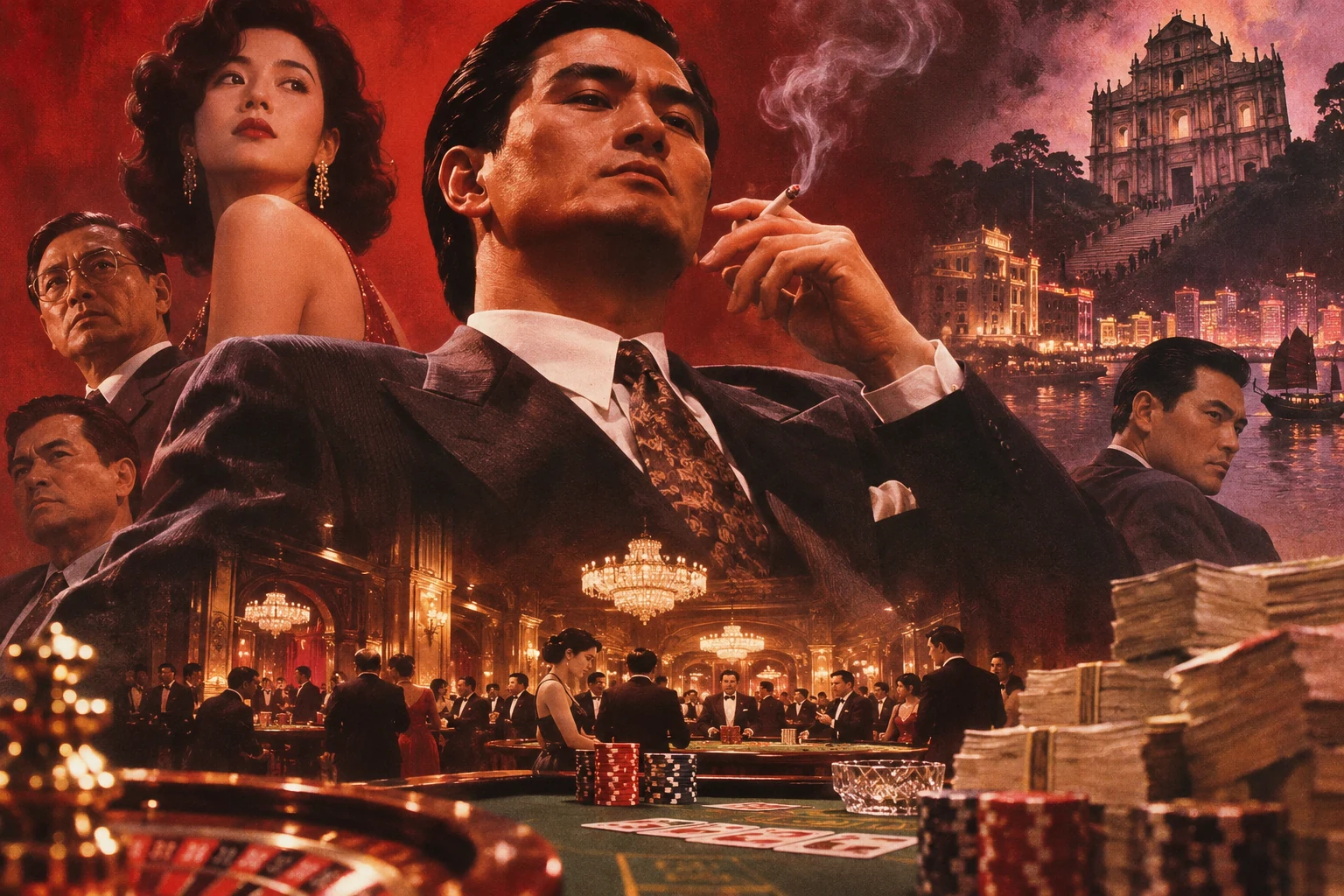
Benny arrives in Macau as a young refugee and gradually establishes himself through work, relationships and commercial opportunities. The film situates his ambitions within the territory's distinctive historical development. In 1962, STDM began operating under an exclusive gaming concession associated with Stanley Ho and his business partners. Its activities linked gaming with hospitality, transportation and tourism. The monopoly lasted until market liberalization in 2002. This historical structure helps explain why control of casino businesses carried influence beyond the gaming floor. Revenue, expenses and taxation all matter to commercial performance.
Fiction and Inspiration
Benny is loosely inspired by Stanley Ho, but his romances, conversations and criminal conflicts are fictionalized. Ho's historical importance is connected to the development of Macau's tourism and casino industry, not to every action of the film's protagonist. Wong Jing dramatizes an entrepreneur's transformation through individual confrontations that simplify complex institutional changes. Casino Tycoon II, released the same year, continues Benny's story. The original is an interesting companion to Martin Scorsese's Casino, although the two films reflect very different historical and regulatory environments.
Related movie guides
- Casino (1995): True Story, Characters & Vegas History
- From Vegas to Macau (2014): Casino Movie Guide
- Ocean's Eleven (2001): The Casino Heist Explained
Further reading
Additional film and historical references; external links may change.