Casino (1995) Explained
Spoiler warning: this article discusses plot developments and the ending.
Casino (1995) examines the rise and collapse of a gambling empire in 1970s and early 1980s Las Vegas. Martin Scorsese turns a story of casino management, organized crime and personal ambition into a portrait of an institution that seems powerful but is vulnerable to the people controlling it. The movie is based on historical events, not an exact documentary.
The Vegas Empire
The fictional Tangiers draws primarily on the Stardust and the wider group of casinos associated with Frank Rosenthal. Ace Rothstein's attention to service, employees and the gaming floor establishes his professional expertise. Behind the public operation, organized crime interests profit from concealed revenue. This contrast explains why accounting, licensing and independent oversight matter. The house edge is an expectation across many wagers, not a guarantee of profit on any given day. The film's business perspective distinguishes it from stories focused on a single gambler.
Real People Behind the Characters
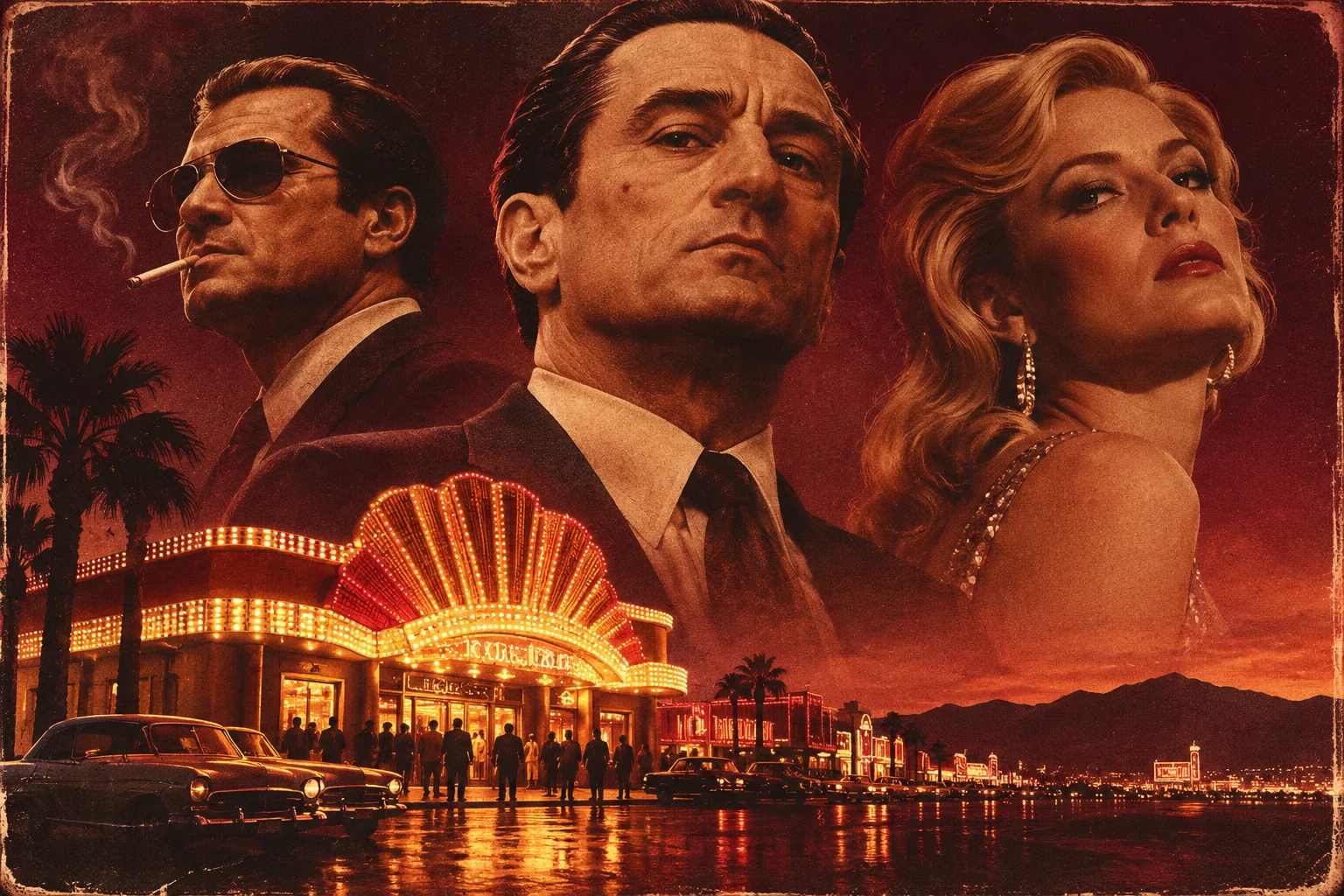
Sam Rothstein is inspired by Frank Rosenthal, Nicky Santoro by Anthony Spilotro, and Ginger McKenna by Geri McGee Rosenthal. Their relationships are dramatized, and the Tangiers itself is fictional. Rosenthal survived a car bombing in 1982; the film adapts that episode as part of its narrative. As the characters lose their influence, the city moves toward corporate resort development. The ending is less a celebration of the old casino world than an uneasy reflection on the cost of its power. The central contradiction is that Ace can evaluate gambling risk but cannot control his relationships.
Related movie guides
- From Vegas to Macau (2014): Casino Movie Guide
- Casino Tycoon (1992): The Rise of a Casino Empire
- Ballad of a Small Player: Macau Casino Setting Explained
Further reading
Additional film and historical references; external links may change.