The Good Thief Movie Guide
Spoiler warning: this article discusses plot developments and the ending.
Neil Jordan's The Good Thief (2002) reinterprets Jean-Pierre Melville's Bob le Flambeur. Nick Nolte plays Bob Montagnet, an aging American gambler and thief whose declining fortunes lead him toward a final criminal adventure on the Mediterranean coast. The film is more interested in chance and moral ambiguity than technical heist spectacle.
The Heist Plan
Bob's financial problems and substance dependence make him receptive to an enterprise involving a Monte Carlo casino and valuable paintings. The art introduces questions about authenticity and value that extend beyond money. His friendship with detective Roger and his concern for Anne complicate the image of a conventional criminal protagonist. Gambling is part of Bob's identity: the possibility of a final success appeals to him even after years of disappointment. The film treats this attraction as a character flaw as well as a source of narrative irony.
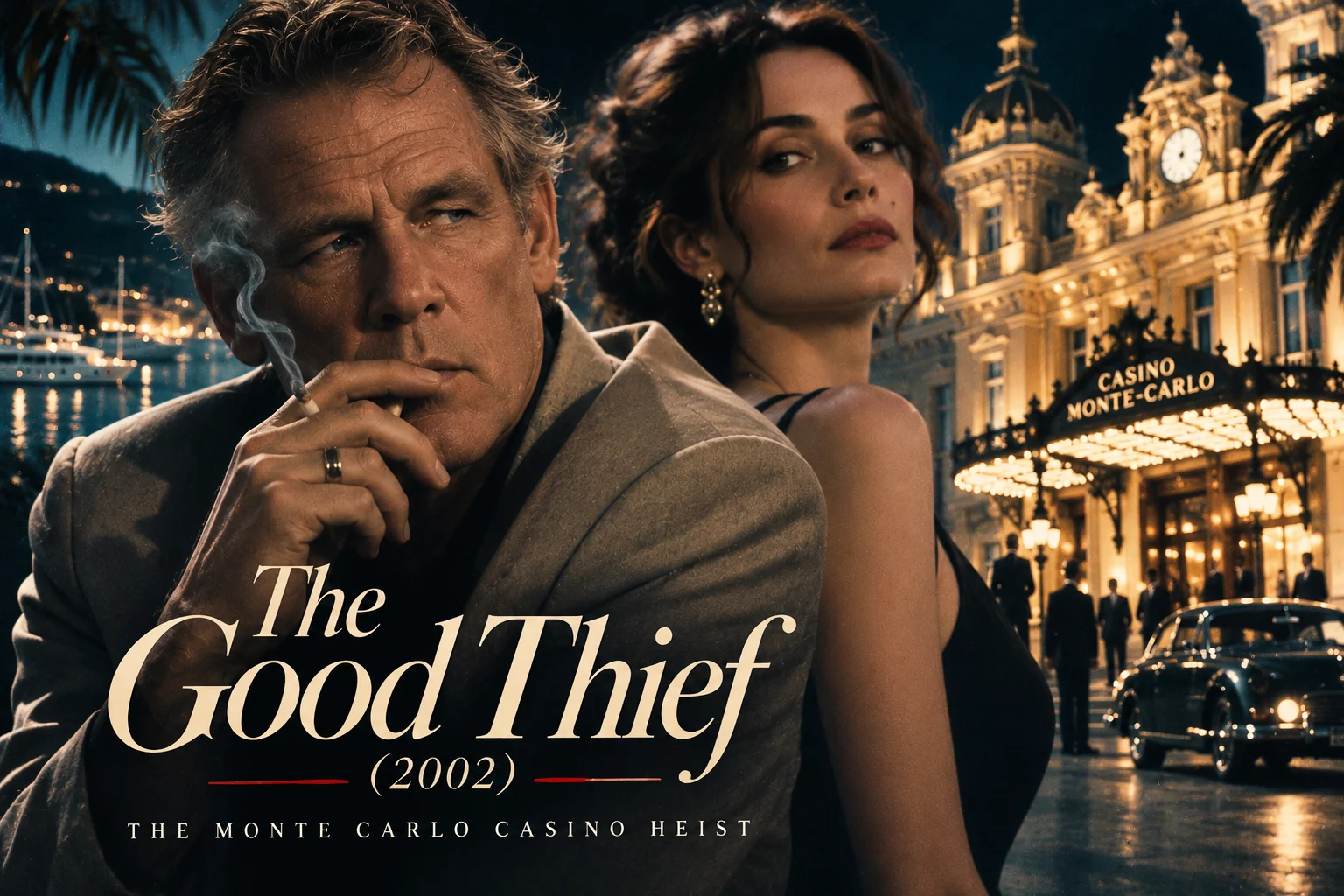
The Monte Carlo Setting
Nice and Monte Carlo create a contrast between ordinary street life and exclusive luxury. The Mediterranean atmosphere distinguishes the film from the polished Las Vegas setting of Ocean's Eleven. Bob's unexpected success at the gaming tables complicates the original purpose of the heist. The reversal is a cinematic coincidence, not evidence that persistence guarantees recovery from losses. The title points to the protagonist's moral complexity: his kindness does not erase his crimes, but his criminal identity does not exhaust his character. The ending leaves chance and redemption deliberately intertwined.
Related movie guides
- Ocean's Eleven (2001): The Casino Heist Explained
- Hard Eight (1996): Casino Secrets and Hidden Motives
- Mississippi Grind (2015): A Casino Road Trip Guide
Further reading
Additional film and historical references; external links may change.