The Cooler Explained
Spoiler warning: this article discusses plot developments and the ending.
Wayne Kramer's The Cooler (2003) stars William H. Macy as Bernie Lootz, a man whose supposed bad luck is valuable to a casino. When he falls in love with Natalie, played by Maria Bello, his relationship with fortune changes. Alec Baldwin's Shelly Kaplow struggles to preserve the old casino culture that depends on Bernie.
The Casino's Bad-Luck Man
The fictional Shangri-La employs Bernie to interrupt customers' winning streaks. His misfortune becomes part of his professional identity and his employer benefits from his unhappiness. The premise belongs to casino folklore and magical realism, not established probability. The romantic relationship challenges the assumption that Bernie is permanently defined by bad luck. Shelly's resistance to change also reflects the film's nostalgia for an older Las Vegas.
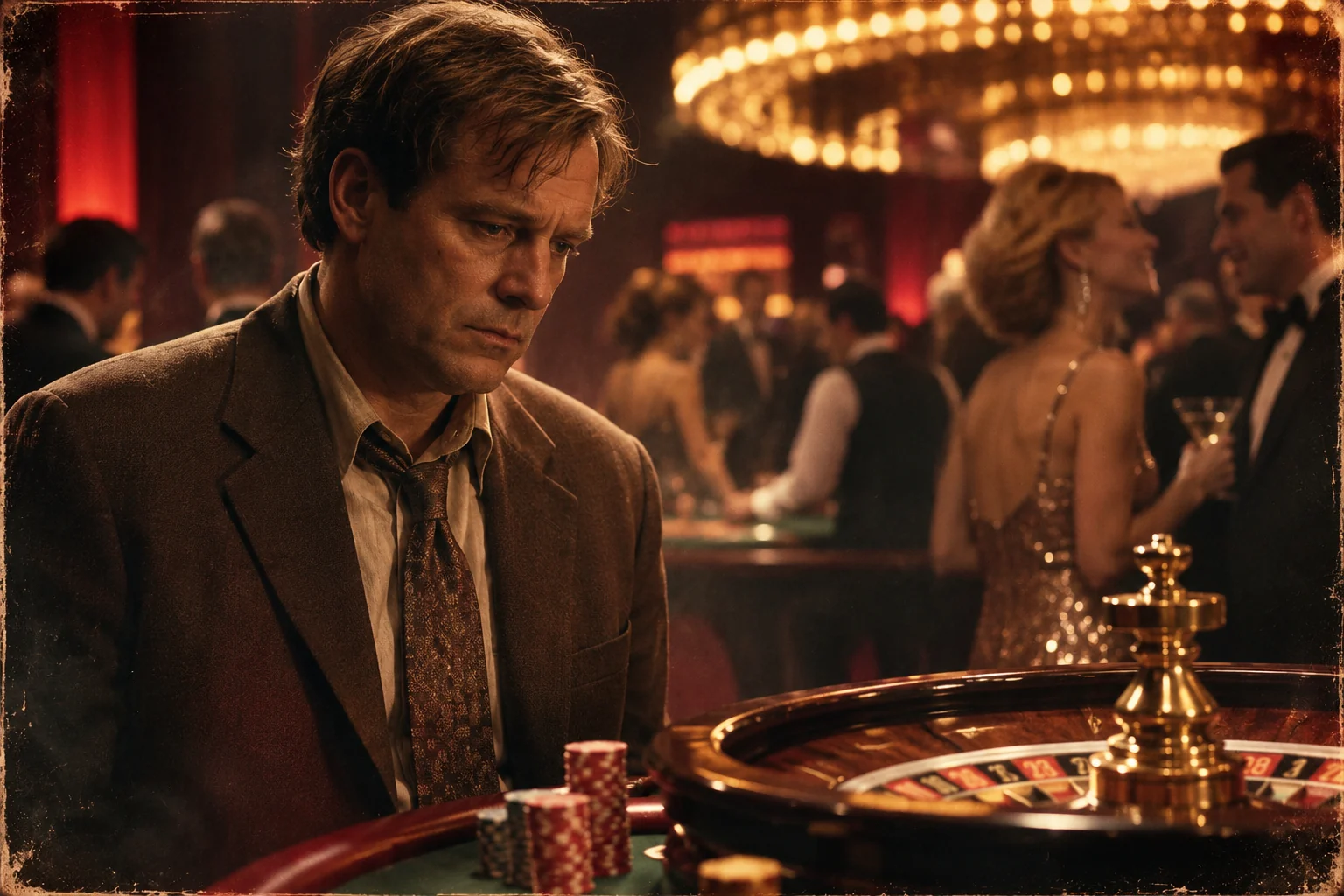
Luck Versus Reality
On a fair European roulette wheel, each spin has 18 red pockets, 18 black pockets and one zero. Previous spins do not change those probabilities. The gambler's fallacy predicts that a streak must reverse, while hot-hand beliefs predict that it will continue; neither provides a reliable advantage in independent random events. Confirmation bias can make coincidences appear meaningful. Bernie's transformation works as a metaphor for changing self-perception, not evidence that love alters casino odds. The film's strongest observation is that belief affects behavior even when it cannot affect randomness.
Related movie guides
- Hard Eight (1996): Casino Secrets and Hidden Motives
- Mississippi Grind (2015): A Casino Road Trip Guide
- Vegas Vacation (1997): Casino Scenes and Gambling Humor
Further reading
Additional film and historical references; external links may change.