Owning Mahowny Explained
Spoiler warning: this article discusses plot developments and the ending.
Richard Kwietniowski's Owning Mahowny (2003) is based on the documented case of Canadian bank employee Brian Molony. Philip Seymour Hoffman portrays Dan Mahowny, a fictionalized version of Molony whose apparently ordinary professional life conceals severe gambling-related harm. Gary Stephen Ross's nonfiction book Stung provided the basis for the screenplay.
The Real Case
Molony worked for the Canadian Imperial Bank of Commerce in Toronto. His fraudulent activities during the early 1980s involved approximately C$10.2 million. He was arrested in 1982, and his gambling included visits to Atlantic City. The historical case raised questions about both bank oversight and casino responsibility. It is important to distinguish the documented criminal case from private conversations and character details invented for the film. Mahowny's modest appearance contrasts with the enormous sums he places at risk.
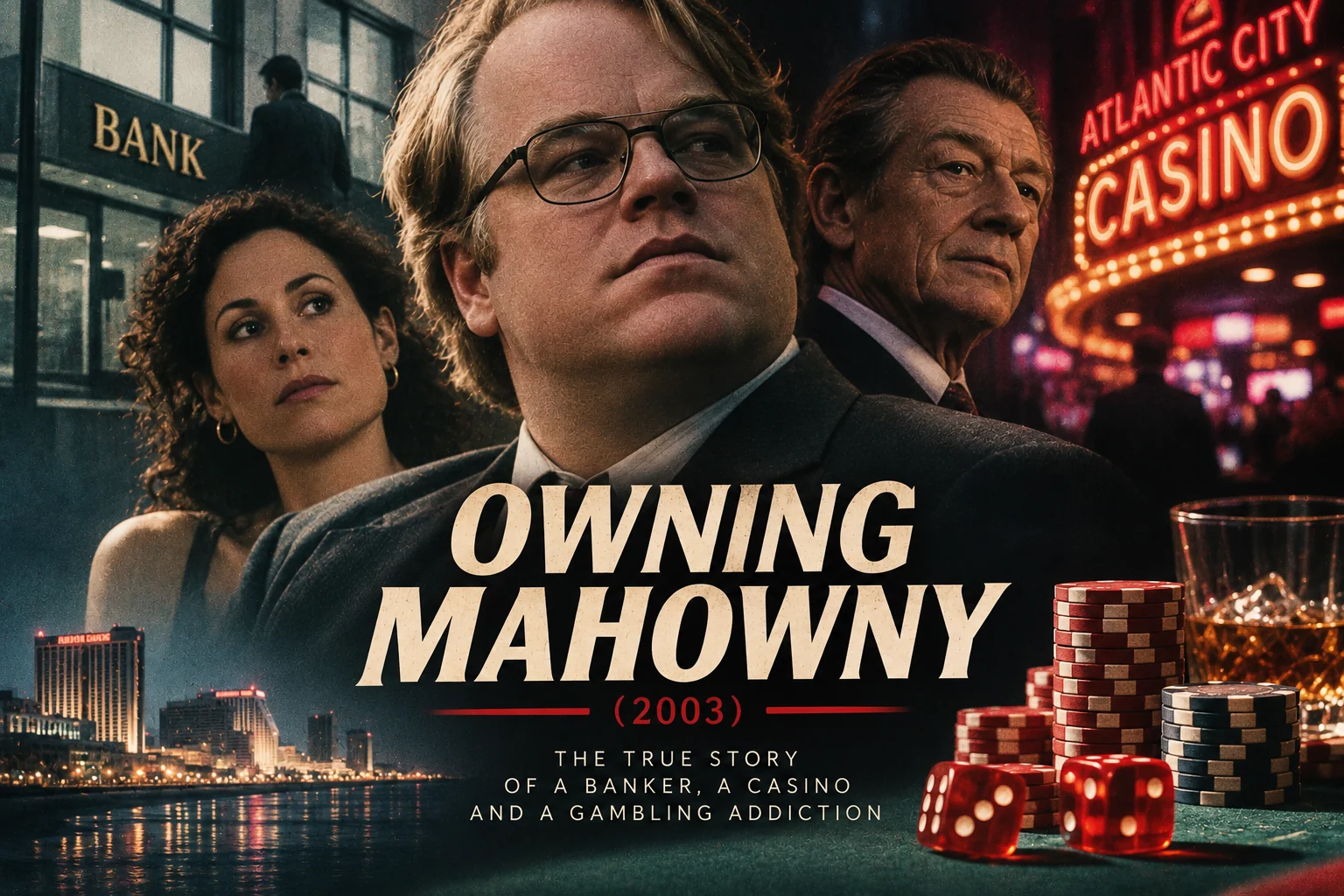
Casinos and Compulsive Gambling
Hoffman's performance emphasizes the inability to stop rather than the excitement of winning. Mahowny's temporary successes do not satisfy him; money becomes a means of continuing the activity. Secrecy, chasing losses, impaired control and damaged relationships are recognizable signs of gambling-related harm. The casino executive's interest in a high-value customer raises ethical questions about promotional attention and customer welfare. The historical case also led to regulatory action involving Caesars Atlantic City. Unlike fictional dramas that solve debt through a miraculous win, the film emphasizes consequences and the challenge of finding satisfaction beyond gambling.
Related movie guides
- The Gambler (2014): Gambling Debt and Casino Stakes
- Mississippi Grind (2015): A Casino Road Trip Guide
- Ballad of a Small Player: Macau Casino Setting Explained
Further reading
Additional film and historical references; external links may change.
- www.rogerebert.com/reviews/owning-mahowny-2003
- openjurist.org/108/frd/737/canadian-imperial-bank-of-commerce-v-boardwalk-regency-corp
- www.pressman.com/owning-mahowny
- time.com/archive/6704971/atlantic-city-caesars-unlucky-day/
- www.upi.com/Archives/1988/01/28/Canada-tries-to-collect-back-taxes-from-gambler/3770570344400/